

News & Articles | News Synopsis
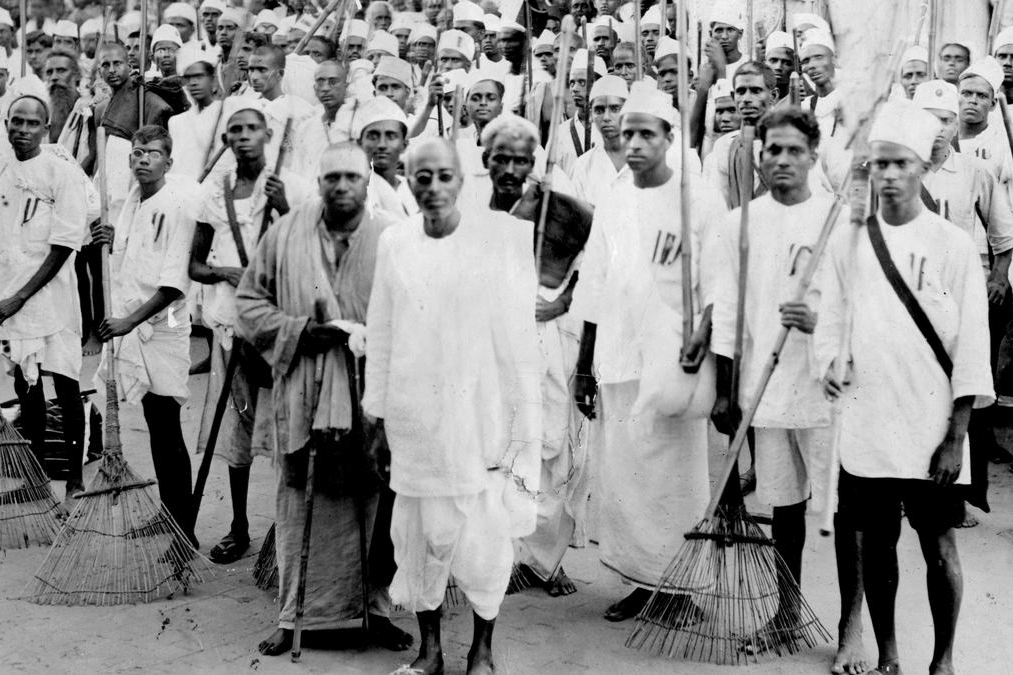
When the historic Civil Disobedience Movement rolled out on the east coast
A week after the Dandi March, Gandhi’s associate C. Rajagopalachari assumed the responsibility of leading the protest in the Tamil land. He marched about 150 miles with Satyagrahis from Trichinopoly to Vedaranyam. At the dawn of April 30, 1930, Rajaji and a few others picked up a fistful of salt near Agasthiyampalli and were arrested. A week after the Dandi March, his associate and veteran Congress leader C. Rajagopalachari (Rajaji) took up the responsibility of leading the non-violent civil disobedience in the Tamil land. Historian and author Rajmohan Gandhi, the grandson of both Mahatma Gandhi and Rajaji, wrote in his book, Rajaji-A Life, that when the Mahatma decided to break the salt law, Rajaji decided to march with Satyagrahis for about 150 miles (around 240 km) from Trichinopoly (Tiruchirappalli) to Vedaranyam, a coastal town in the erstwhile Tanjore district.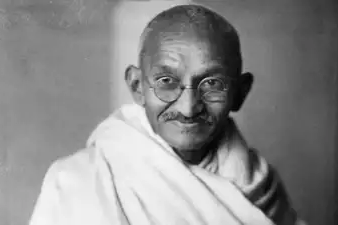
Gandhians launch 94th salt satyagraha yatra in Trichy
The 94th Salt Satyagraha Yatra from Trichy commemorates the historic Dandi Salt March led by Mahatma Gandhi against British salt taxes in 1930. Organized by the Salt Satyagraha Dandi Yatra Memorial Committee, the march also reenacts C. Rajagopalachari's Vedaranyam Salt March. Although the event usually begins on April 13, this year's start was delayed due to elections. Gandhians and social activists embarked on the journey, planning to hold a token hunger strike in Vedaranyam to honor the independence movement and educate the youth about the sacrifices made during colonial rule.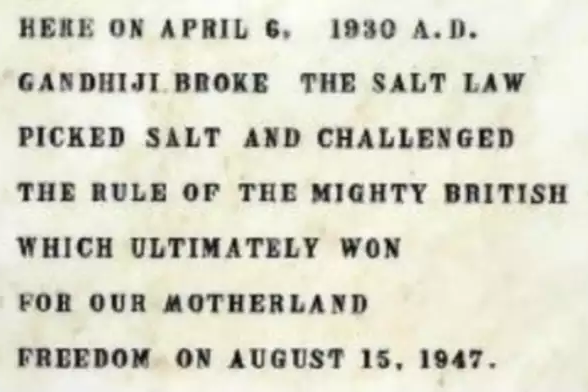
Here, Gandhi shook Raj with Salt
Saifee Villa in Dandi, Gujarat, a symbol of India’s fight for freedom, was where Gandhi concluded the Salt March on April 5, 1930, defying British salt laws. Declared a national treasure on April 6, 1961, by Syedna Taher Saifuddin, it now serves as a Gandhi Memorial Museum. The villa, though modest and worn, remains a key historic site. Nearby, the National Satyagraha Memorial offers an immersive experience of the 1930 Dandi March. Despite its importance, Saifee Villa faces maintenance challenges but continues to attract visitors interested in India’s independence movement.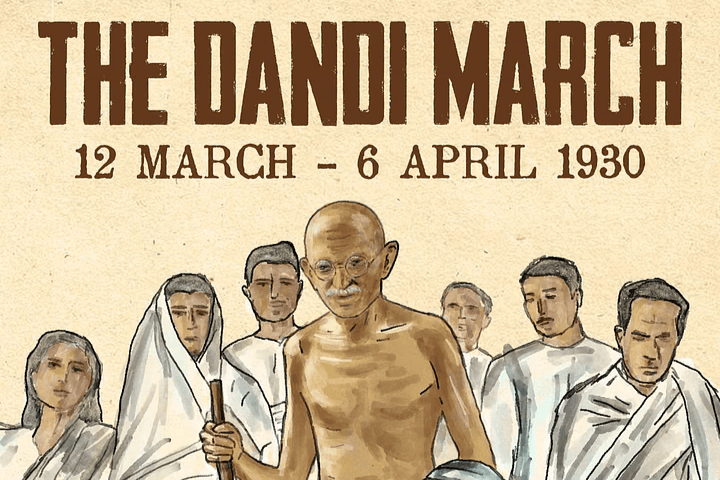
Graphic Novel | How Gandhi’s Dandi March Shook the British Empire
In March 1930, Mahatma Gandhi led the historic 24-day Dandi March to protest the British Salt Tax, sparking the Civil Disobedience Movement and shaking the foundations of the British Empire. Initially dismissed by his own aides and the British Viceroy, Gandhi’s focus on salt—a basic necessity—ignited a nationwide movement for ‘purna swaraj’ (complete independence). Leaders like Sarojini Naidu and C. Rajagopalachari followed suit, challenging other unjust taxes. The March’s influence reached beyond India, inspiring American civil rights leaders like Martin Luther King Jr., who admired Gandhi’s philosophy of nonviolent resistance, or Satyagraha.
Mohandas Karamchand Gandhi, the man, the idea, is as close to immortal as can get.
Mahatma Gandhi’s impact continues to be reflected on magazine covers and front pages decades after his death. Time magazine featured Gandhi as its Man of the Year in January 1931, recognizing his global influence in 1930. The cover depicted a contemplative Gandhi with his iconic spectacles. He appeared again on Time’s June 30, 1947, issue, and on Newsweek’s February 9, 1948, issue following his assassination. Gandhi also graced covers of Life and Dawn, and even the RSS's Organiser in recent years, marking his enduring legacy and diverse impact across political and social realms.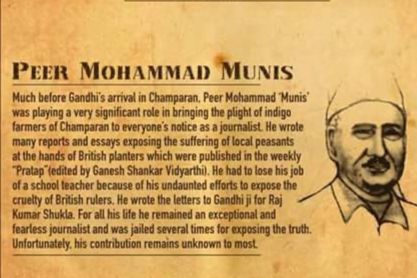
The ‘Rogue Journalist’ Without Whom Gandhi’s Champaran Satyagraha May Not Have Happened
Pir Muhammed Munis, a journalist, was instrumental in the Champaran Satyagraha, India’s first organized civil disobedience movement in 1917. Through his powerful writing, he highlighted the exploitation of Champaran's farmers, forced by the British to grow indigo instead of food crops, which led to famine. Munis and local farmer Rajkumar Shukla wrote to Mahatma Gandhi, urging him to visit Champaran, prompting Gandhi's pivotal involvement. Munis’ unwavering advocacy for farmers’ rights and his promotion of Hindi established him as a significant, though often overlooked, figure in India's struggle for independence.
April 6, the day Mahatma Gandhi broke the British Raj salt laws
The Dandi March, led by Mahatma Gandhi from March 12 to April 6, 1930, was a pivotal act of civil disobedience against British salt laws. Gandhi and his followers walked over 240 miles to Dandi, where Gandhi defied British salt regulations by making salt from seawater. This act of defiance symbolized resistance to British oppression and galvanized the Indian independence movement. April 6 is now commemorated as "Salt Satyagraha Day" or "Dandi Memorial Day," marking a significant turn in India's struggle for freedom. The British salt laws, which taxed and controlled salt production, were abolished in 1947 with India's independence.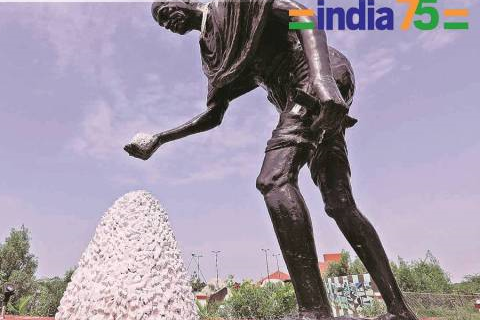
Salt that Seasons: Postcard from Dandi
Dandi, once the epicenter of Gandhi’s 1930 Salt March, still holds its historic identity. The 390 km march from Sabarmati Ashram to Dandi sparked nationwide civil disobedience and left a lasting impact on the village. Dhirubhai Patel, born the year of the march, recalls how Khadi became integral to Dandi, with every household owning a charkha. Even after Independence, villagers wore Khadi, symbolizing their connection to the movement. Today, Dandi’s 1,200 residents honor their past through a memorial, while many seek their future abroad.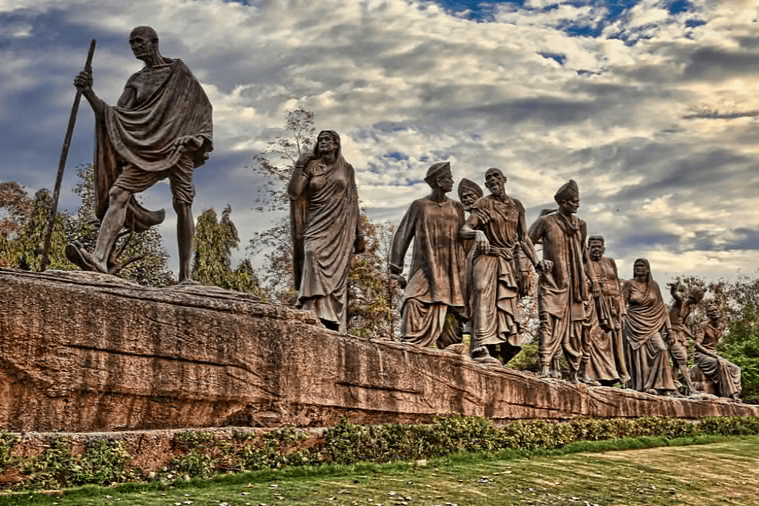
Key events in the Freedom Struggle leading to India's independence
While everyday was a struggle for the Indians fighting for their freedom, there were some key events that rattled the British monarchy. India has had a rich and varied history, one that isn't devoid of any struggles. For 200 years, India struggled to free itself from the shackles of the British Raj, making the fight to freedom a long-drawn one. While every day was a struggle for the Indians fighting for their freedom, some key events rattled the British monarchy, enough for India to awaken to its freedom on August 15, 1947. On India's 75th Independence Day, let us take a look at the key events.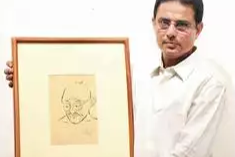
Dandi March sketch found in flea market to be displayed on I-day
Vadodara: A drawing book containing rare sketches of the historic 1930 Dandi March, created by 27-year-old Dalit artist Chhaganlal Jadav, was recently rediscovered by historian Rizwan Kadri at a flea market in Ahmedabad. Jadav, who joined Gandhi on the 385 km march, captured live moments through his art, documenting the iconic event. These 71 sketches, long forgotten, will now be exhibited at the Baroda Museum and Picture Gallery from August 15 to October 2, in a trilingual display. Jadav's work, a rare visual record of the Salt March and his imprisonment, offers a unique perspective on India's struggle for independence.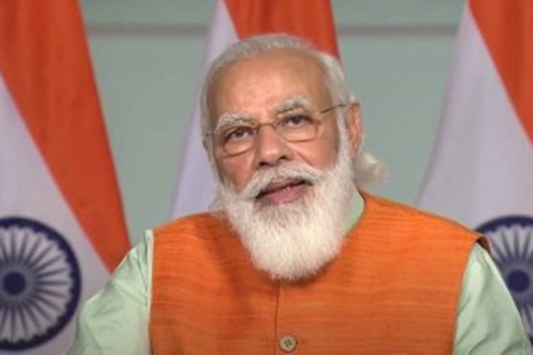
Dandi march flagged off from Sabarmati Ashram: 81 marchers set off on 386-km route
Several “BJP karyakartas” from Madhya Pradesh have also joined the first 75-kilometre leg of the march led by Union Minister of State for Culture and Tourism, Prahlad Singh Patel, from the Dandi Bridge. Prime Minister Narendra Modi on Friday flagged off the commemorative Dandi March from near Abhay Ghat in Ahmedabad on Friday, where 81 marchers will walk the 386-kilometre route from Sabarmati Ashram to Dandi, marking the launch of the celebrations of 75 years of Independence. Several “BJP karyakartas” from Madhya Pradesh have also joined the first 75-kilometre leg of the march led by Union Minister of State for Culture and Tourism, Prahlad Singh Patel, from the Dandi Bridge.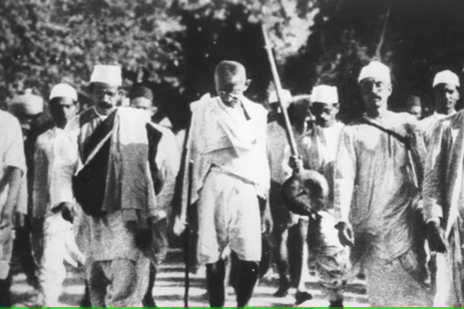
‘A lump of salt': Significance of Dandi March led by Mahatma Gandhi
On Friday, Prime Minister Narendra Modi will inaugurate a 25-day commemorative foot march from Sabarmati Ashram in Ahmedabad to Dandi, marking the 75th anniversary of India’s Independence. This event celebrates the Dandi March, or Salt Satyagraha, led by Mahatma Gandhi in 1930 to protest British salt laws. Gandhi’s march, which began on March 12, 1930, ended with his symbolic defiance of the salt tax on April 5, inspiring nationwide civil disobedience. The current march will retrace Gandhi’s route, with groups covering different segments, including a 75km stretch to Nadiad.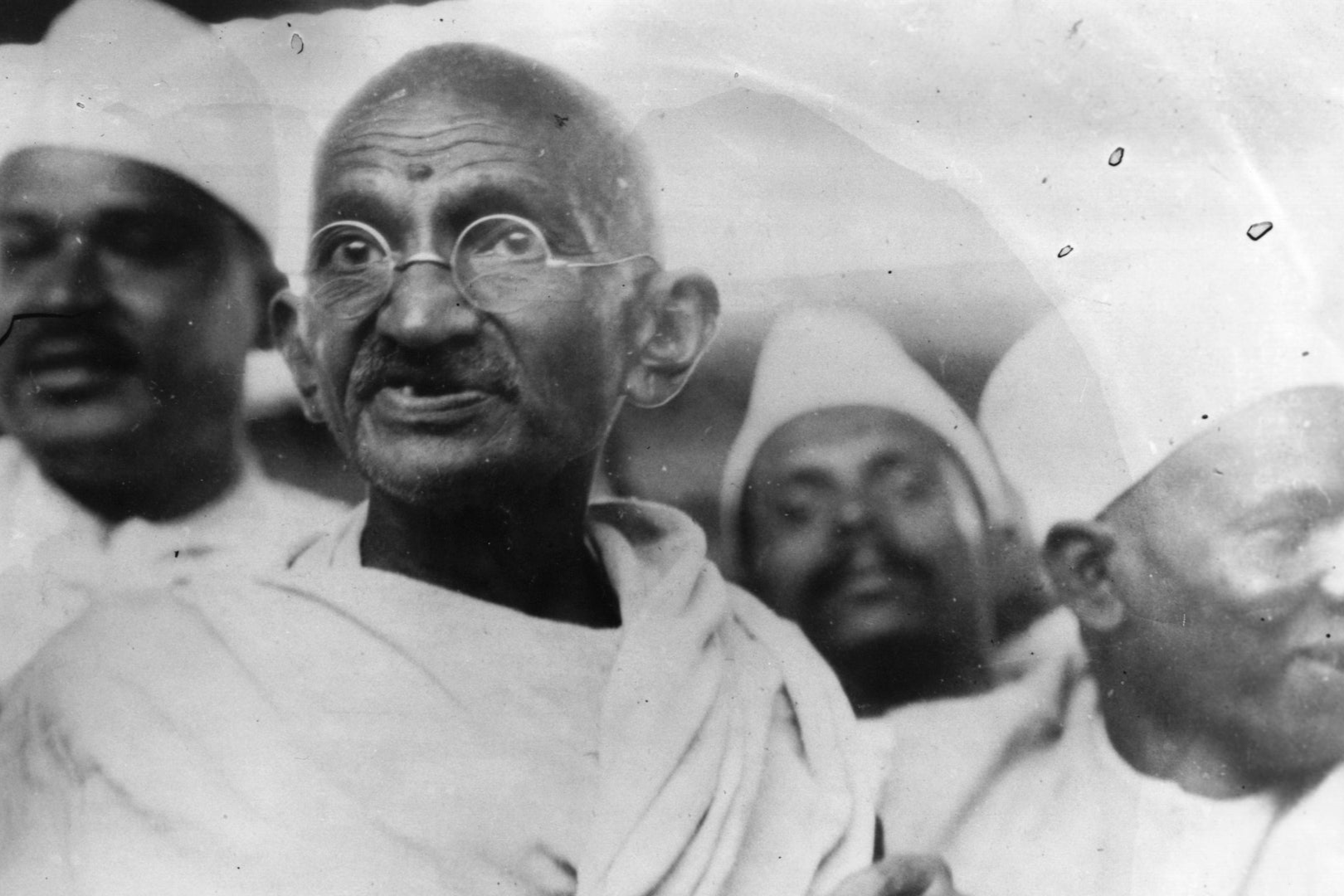
Magazine | Revisiting the villages along Gandhi's Dandi Yatra
The Salt March began at Sabarmati Ashram’s gate near the Sarva-Sakshi Amli, a tamarind tree that Gandhi named "All-Witnessing." This tree, now gone, stood in barren terrain and saw the march's inception. A half-kilometer away, Dandi Bridge, crossed by the first satyagrahis in 1930, connected the ashram to Gujarat Vidyapith. Unlike the fallen tree, the bridge has been restored after years of decay. Once dilapidated, with rusted signs and ruined sections, it’s now locked to the public. By chance, I found it open, allowing me to capture its historic significance.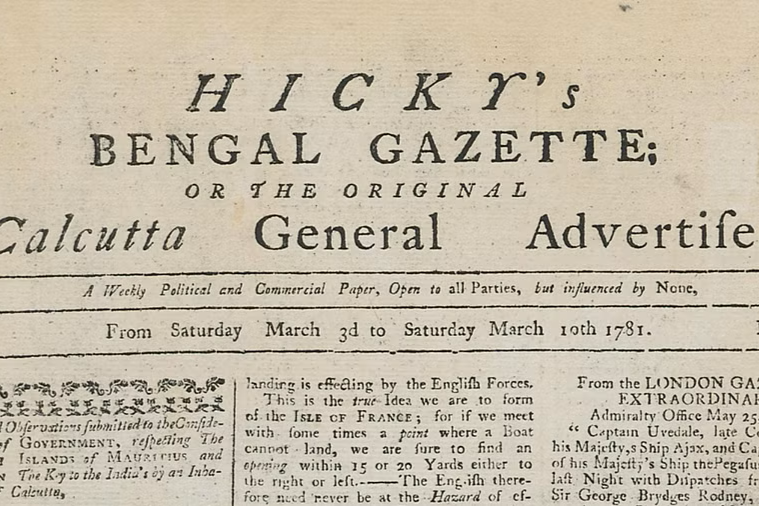
How the Press participated in India's freedom struggle
The Salt March in 1930 marked a pivotal moment in India's struggle for independence, showcasing the power of nonviolent resistance. Led by Mahatma Gandhi, this 240-mile march to the Arabian Sea aimed to protest the British salt tax, symbolizing broader colonial oppression. As Gandhi and his followers marched, the press played a crucial role in disseminating their message, despite severe censorship from the British Raj. Newspapers faced crackdowns, yet continued to report on the movement, galvanizing public support. This resistance through journalism highlighted the press's vital contribution to the independence movement, ultimately aiding in the fight for swaraj.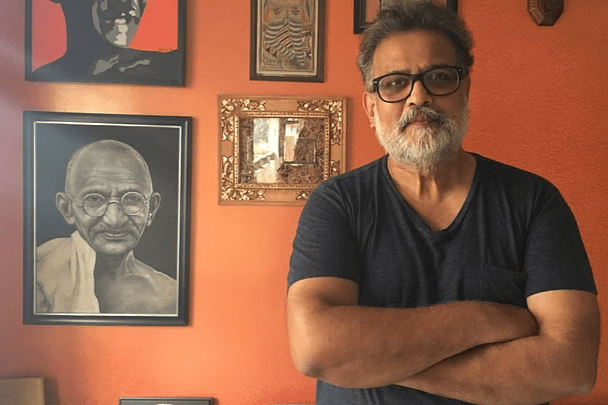
Mahatma Gandhi’s Great Grandson Sets Off on ‘Dandi March’
On the 90th anniversary of the historic 'Dandi March', Mahatma Gandhi's great grandson Tushar Gandhi on Thursday, 12 March, embarked on a foot march from the Sabarmati Ashram to Dandi in Navsari district. He expects to complete the 386-km-long journey in 26 days, the same number of days that the Father of the Nation and his followers took to traverse the distance between the two points during the Salt Satyagraha of 1930. "Since it is the 90th anniversary of the historic Dandi Kooch, I thought we should re-enact it. I had done it on its 75th anniversary also," Tushar Gandhi said.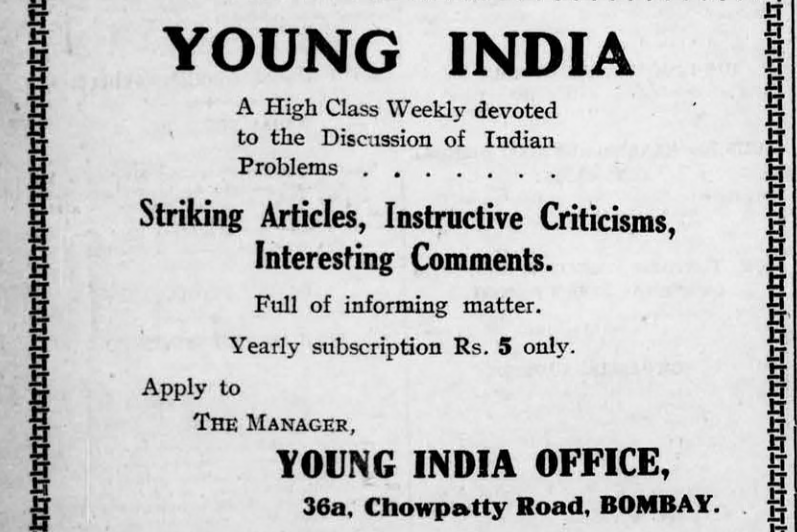
As Mahatma Gandhi turns 150, his news magazines Navjivan and Young India turn 100
Mahatma Gandhi’s 150th birth anniversary coincides with the centenary of his magazines Young India and Navjivan(1919-1932). Gandhi, an experienced editor, used these periodicals to promote the Indian freedom struggle, addressing key issues like the non-cooperation movement, Hindu-Muslim relations, and the Dandi March. Despite setbacks, including Gandhi’s imprisonment, both magazines became crucial platforms for spreading the message of Satyagraha. Young India and Navjivan were eventually shut down in 1932 due to government crackdowns, but they left a lasting impact on Indian journalism and the independence movement.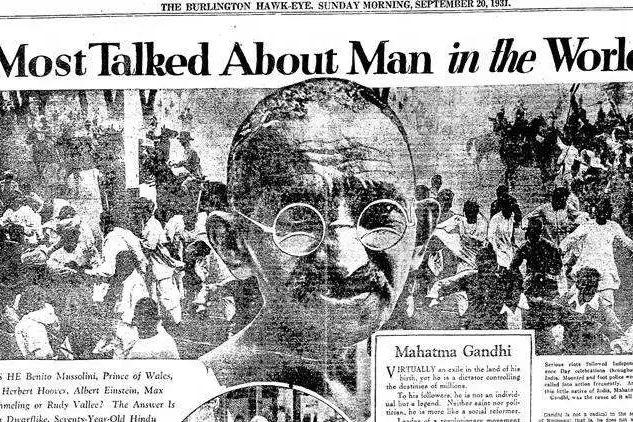
How Mahatma Gandhi became a US news star in the 1930s
Mahatma Gandhi's strategy to challenge British rule involved publicizing India's perspective and influencing both British and American public opinion. Historian Leonard Gordon notes that from 1905 to 1947, Indian nationalists and British officials engaged in a propaganda battle for American support. Until the 1920s, American news relied heavily on British sources like Reuters, leading to a biased portrayal of India. British attempts to obscure negative events, such as the Jallianwala Bagh massacre, were often successful due to their control over news coverage.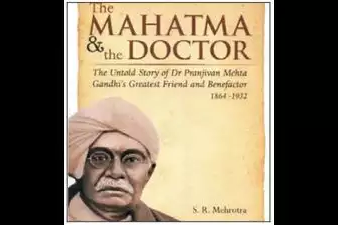
Dandi March anniversary: Pranjivan Mehta first talked of Salt march with Mahatma
Ahmedabad: Dr. Pranjivandas Jagjivandas Mehta, whom Mahatma Gandhi described as his "greatest friend and benefactor," played a pivotal role in inspiring the Salt March. Nearly a decade before the march, Mehta urged Gandhi to protest the oppressive salt tax, deeply concerned about India's impoverished peasants. Despite suffering a major stroke in the 1920s, Mehta remained committed to Gandhi's cause, even seeking permission to join the Salt Satyagraha despite his failing health. Although he couldn't participate, his influence on Gandhi was profound. Mehta passed away in 1932, with Gandhi mourning the loss of his lifelong friend.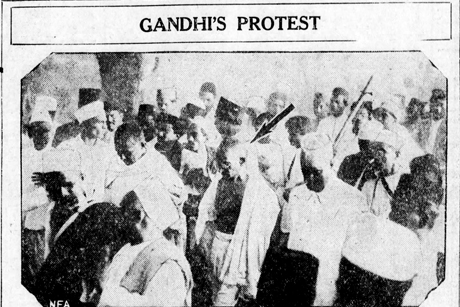
Today in Media History: In 1930, the press reported on Mahatma Gandhi’s Salt March
Eighty-five years ago today, news outlets worldwide reported on Mahatma Gandhi's Salt March, a pivotal act of civil disobedience against British rule in India. The March, spanning 240 miles from Ahmedabad to the Arabian Sea, led to the arrest of nearly 60,000 people, including Gandhi. A silent film and NEA image from the Marion Times-Mirror captured Gandhi's resolve during the march. This visual documentation echoed Dr. Martin Luther King Jr.'s later use of news images to advance non-violent social change, as he acknowledged Gandhi’s influence on his own civil rights techniques.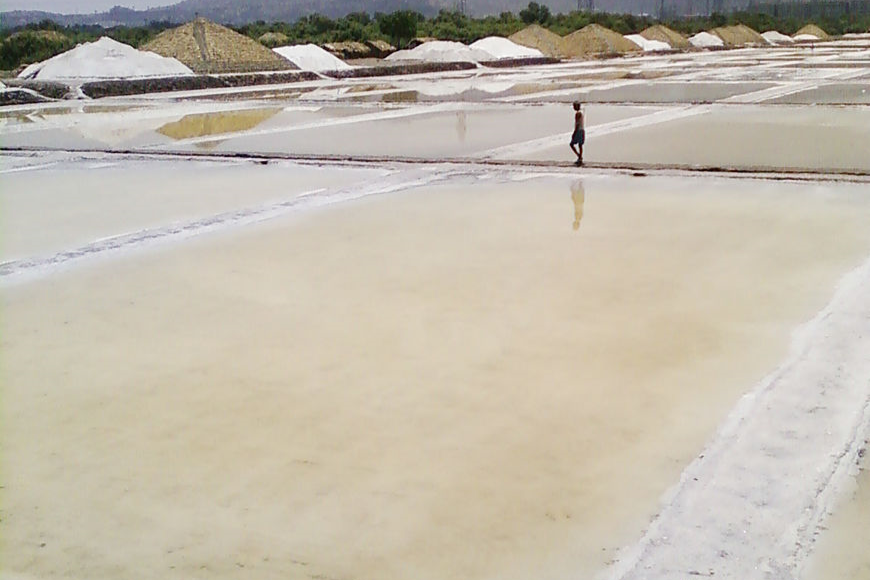
85 years after Gandhi's Dandi march, few traces remain of Mumbai's Wadala salt satyagraha
The 1930 Salt Satyagraha, led by Mahatma Gandhi, marked a pivotal moment in India's freedom struggle, protesting the British-imposed salt tax. Gandhi's 390-km march to Dandi sparked nationwide civil disobedience, with raids on government salt works, notably in Wadala, Mumbai. Despite brutal British crackdowns, the movement gained global attention, challenging colonial rule. The Gandhi-Irwin Pact ended the protest, but the salt tax persisted. Ironically, modern India continues to impose a salt cess to fund the Salt Department, even though its economic viability is questionable. Efforts to abolish the tax have yet to succeed.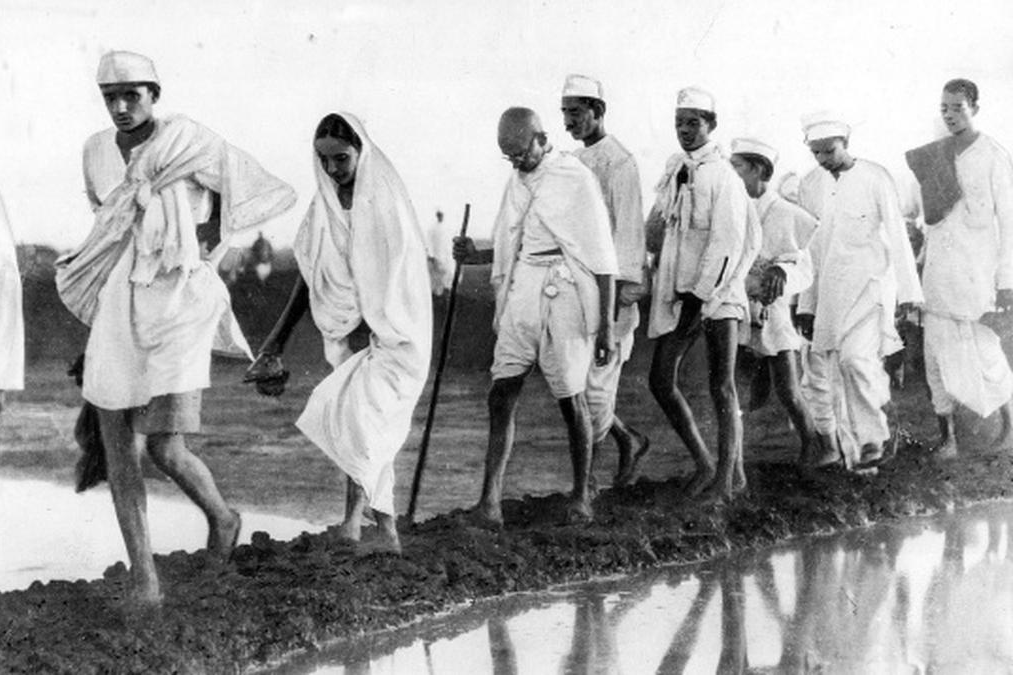
The Great Dandi March & eighty years after
Mahatma Gandhi's choice of salt for the 1930 campaign initially evoked derision and scepticism but the march proved to be sui generis, a gift of gifts to India. It is time to give something back to Dandi, a commemoration that is not stereotypical. This was not the first time that Mohandas Karamchand Gandhi had decided to lead a march. A great column of over 2000 men, women and children had moved in 1913 under his lead from Natal across the Transvaal border to break a ban on Indians travelling from one South African province to another, and to protest against a law that rendered all marriages barring those under Christian aegis as illegal. The result, coming with the Relief of Indians Act, was dramatic.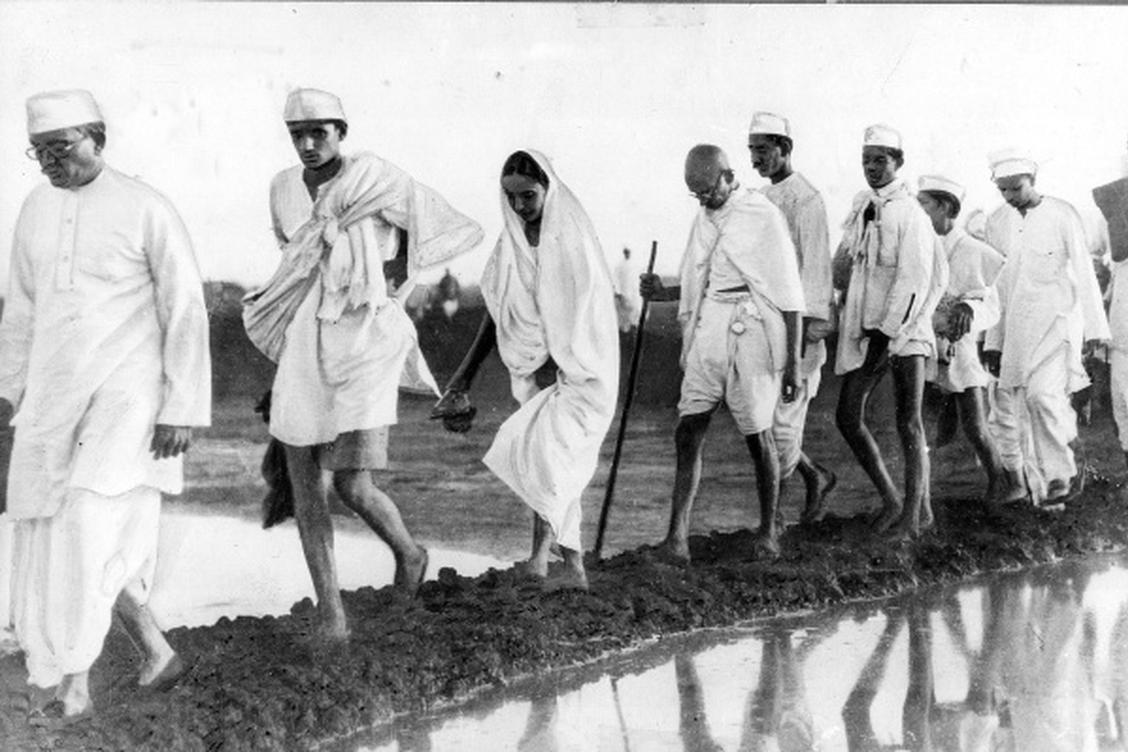
Dandi in the time of globalisation
Rajkumar Jeswani, a spare parts salesman from Ahmedabad, joined the 2005 Dandi Yatra as his tribute to Mahatma Gandhi. Each night, he massaged the marchers' feet, shared jokes, and eased their pain. Despite his financial struggles, Rajkumar was determined to participate, working hard to afford the journey. "This is my shraddhanjali to Bapu," he said. The experience transformed him, as he found truth and love among fellow marchers and villagers along the way. "It's going to be very sad when we all have to go our separate ways," he reflected.

Follow us on these Social


Also Visit:Privacy Policy | Terms of Use | Get In Touch | Sitemap